
A rose amongst the many white and black blurs, she walked. Burgundy layers were clasped to her bodice of lace and her lips were painted to match. She walked and smiled, and walked and smiled. But then she saw how old, cracked, yellow . . . terribly cruel . . . he looked.
And upon seeing that face, she fled. She fled and fled and fled, and her eyes bled black. She tripped and stumbled upon the petals that were once luscious and full, but now were ripped and ragged. There were gasps and sighs, but still she fled into the open rain, and she let it fall on her. She paid it no mind; it was her friend, her only friend.
She finally stopped at a withered tree—which was all alone in the middle of a meadow—and placed one hand on the knotted bark and the other on her knee so as to catch her breath.
The heavy boughs of the tree lightened the fall of the rain, creating a mist that gathered upon her petals and dampened her already-wavy hair.
Tree, she coughed, please do not fall. Please do not fall. The rain has already fallen. You would only add to the disease. She murmured it over and over and still, over again, shaking her head. And only when ran had stopped and the sun had peaked over the horizon did she decide that the tree would not fall.
Thank you. She straightened out her body, weary from the night’s stay at the lonely tree. She smoothed and picked at the folds of her once beautiful rose, and smiled. And she ran back to where she had come from, and this time when she saw him, he was as beautiful as the first time she had seen him.
The disease had fled.
Friday, March 20, 2009

Monday, March 16, 2009
Absence
They had all stopped, every last one. Not a hand moved, not a second was passed.
Time had completely ended. And all I could do was smile.
The kids in my class thought that it was only our clock until the principal came over the intercom saying that every clock in the school wasn’t working. That even the staff’s cell phones weren’t working. A few people in the room gasped, but I had seen this coming. Time was a wasteful thing. Our whole lives are built around it from the time you were born to the time you died. When you know of time, you waste your life doing things you think you have to do before you die.
Without time, life is infinite.
Most people think that time is a good thing. I look around at the –scared?—yes, scared faces in the classroom, and I want to laugh. Instead, I turn back to my notebook to doodle a clock with both hands pointing “up” at the twelve.
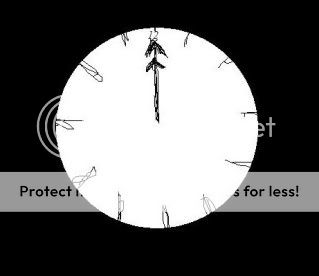
I didn’t bother drawing in the other numbers. The twelve was all that mattered, for, that was how the clock was stopped. 12:00:36 was the time when all the clocks of the world ceased to tell us how long we had to live.
12:00:36.
How, the children asked, how are we to tell what time to go somewhere?
“Idiots,” I muttered. It doesn’t matter now, I thought. We have been liberated from the worst disease that mankind has created and spread. Worse even than the Bubonic Plague. At least that took away some of the people’s misery. And most of them died without a headstone. Without time above their decaying faces.
I got up out of my seat and began to walk towards the old iron door when my teacher asked, “Where do you think you’re going? Class is still in.” He said it as if I should care.
I stopped and turned around with a smirk upon my face and asked, “How can you prove it?” His fake smile soon turned into a grimace. Without waiting for the response I knew I wouldn’t get, I put my hand on the cold door handle and pulled it down, still wearing that triumphant smile.
Time had completely ended. And all I could do was smile.
The kids in my class thought that it was only our clock until the principal came over the intercom saying that every clock in the school wasn’t working. That even the staff’s cell phones weren’t working. A few people in the room gasped, but I had seen this coming. Time was a wasteful thing. Our whole lives are built around it from the time you were born to the time you died. When you know of time, you waste your life doing things you think you have to do before you die.
Without time, life is infinite.
Most people think that time is a good thing. I look around at the –scared?—yes, scared faces in the classroom, and I want to laugh. Instead, I turn back to my notebook to doodle a clock with both hands pointing “up” at the twelve.

I didn’t bother drawing in the other numbers. The twelve was all that mattered, for, that was how the clock was stopped. 12:00:36 was the time when all the clocks of the world ceased to tell us how long we had to live.
12:00:36.
How, the children asked, how are we to tell what time to go somewhere?
“Idiots,” I muttered. It doesn’t matter now, I thought. We have been liberated from the worst disease that mankind has created and spread. Worse even than the Bubonic Plague. At least that took away some of the people’s misery. And most of them died without a headstone. Without time above their decaying faces.
I got up out of my seat and began to walk towards the old iron door when my teacher asked, “Where do you think you’re going? Class is still in.” He said it as if I should care.
I stopped and turned around with a smirk upon my face and asked, “How can you prove it?” His fake smile soon turned into a grimace. Without waiting for the response I knew I wouldn’t get, I put my hand on the cold door handle and pulled it down, still wearing that triumphant smile.
Thursday, February 5, 2009
Andante
Clay hands, the gym, posters, the cafeteria. Halloween ribbons, black and orange. Pumpkins surrounding doorways. Green, red, blue, tan, tile. Teachers busing their children to the bathroom, to their next class. I, with my friends, walked behind her – Miss – to the music room. We walked in and music notes were hung from the ceiling. Green cupboards along the walls, blue carpet covering the cement below – a first grade music room. We sat in a semi-circle and our homeroom teacher left.
He, at the head of the room, began to speak. He talked of music, of the piano, of notes and of rhythms. He even played a little piano and tried to get us to sing along with him. Excited eyes and quick minds memorized the lyrics to the songs and began to sing with him, myself included. Then:
There was an old woman who was skin and bones. . .
Ah, our favorite. We all sang to this one, anxious for the end. Every time, we jumped. Every time, though we knew the end.
Boo!
We jumped, laughed, screamed. He quieted us – the class was almost over – then walked around handing us a letter for our parents.
“I teach piano lessons for you guys,” he said, “and I’d love to teach any of you. Please, give this to your parents.”
We shrugged, and got up; our teacher had come for us.
###
Clay hands, the gym, posters, the cafeteria. Halloween ribbons, black and orange. My mom had brought me to school to talk to him about lessons. She had told me that I would learn to play the piano. Enthusiasm reflected in my eyes, in my speech – bubbly.
She led me by the hand into his room, and began to talk to him. Money, times, dates, weeks, semesters, breaks. All this they talked of and I was left out of the conversation. I didn’t mind, I was going to learn how to play.
###
Guitars, pianos, keyboards, sheet music – music store. We were looking for a keyboard and for my first piano books – Theory, Technic, Piano, and Performance books by Bastien. Pink books, primer level books, with a metronome on the front.
We walked out of that store with the four books and a brand new keyboard, all for me, all for me.
###
The next week, I went to his house for my first lesson – a private lesson. He assigned my first pages. It was only a few black keys, slow rhythms, music theory. I practiced the first night for a long time, trying to be perfect. I did my theory, I played, wrote some more, played. For a week, I practiced, and then went back to his house.
Patience, he would say, learn patience. You play too fast. Then he would go to the next page and the next, black and white. For the next nine years, it was the same. The only thing that changed was the books, the level, and how much I practiced. I practiced less until I learned how to play classical music, like Chopin and Mozart. Beethoven was still hard, even at eight years, but I could play it if I really wanted to.
Still he would tell me, Patience, don’t go so fast. The music won’t run away. Learn to play slow before you play it fast.
So, I learned it slow, began to be more patient. I learned two things: patience and passion.
Black notes, whole notes, notes with half a beat, notes with a dot. Whole, half, quarter, eighth, rests. Bar lines, measures, key signatures, sharps, flats. Staff, treble, bass, fermatas. Allegro, Moderato, Andante.
He, at the head of the room, began to speak. He talked of music, of the piano, of notes and of rhythms. He even played a little piano and tried to get us to sing along with him. Excited eyes and quick minds memorized the lyrics to the songs and began to sing with him, myself included. Then:
There was an old woman who was skin and bones. . .
Ah, our favorite. We all sang to this one, anxious for the end. Every time, we jumped. Every time, though we knew the end.
Boo!
We jumped, laughed, screamed. He quieted us – the class was almost over – then walked around handing us a letter for our parents.
“I teach piano lessons for you guys,” he said, “and I’d love to teach any of you. Please, give this to your parents.”
We shrugged, and got up; our teacher had come for us.
###
Clay hands, the gym, posters, the cafeteria. Halloween ribbons, black and orange. My mom had brought me to school to talk to him about lessons. She had told me that I would learn to play the piano. Enthusiasm reflected in my eyes, in my speech – bubbly.
She led me by the hand into his room, and began to talk to him. Money, times, dates, weeks, semesters, breaks. All this they talked of and I was left out of the conversation. I didn’t mind, I was going to learn how to play.
###
Guitars, pianos, keyboards, sheet music – music store. We were looking for a keyboard and for my first piano books – Theory, Technic, Piano, and Performance books by Bastien. Pink books, primer level books, with a metronome on the front.
We walked out of that store with the four books and a brand new keyboard, all for me, all for me.
###
The next week, I went to his house for my first lesson – a private lesson. He assigned my first pages. It was only a few black keys, slow rhythms, music theory. I practiced the first night for a long time, trying to be perfect. I did my theory, I played, wrote some more, played. For a week, I practiced, and then went back to his house.
Patience, he would say, learn patience. You play too fast. Then he would go to the next page and the next, black and white. For the next nine years, it was the same. The only thing that changed was the books, the level, and how much I practiced. I practiced less until I learned how to play classical music, like Chopin and Mozart. Beethoven was still hard, even at eight years, but I could play it if I really wanted to.
Still he would tell me, Patience, don’t go so fast. The music won’t run away. Learn to play slow before you play it fast.
So, I learned it slow, began to be more patient. I learned two things: patience and passion.
Black notes, whole notes, notes with half a beat, notes with a dot. Whole, half, quarter, eighth, rests. Bar lines, measures, key signatures, sharps, flats. Staff, treble, bass, fermatas. Allegro, Moderato, Andante.
Wednesday, January 14, 2009
Prologue of my [Untitled] novel
Prologue:
On a wet street in the middle of a city, a girl of roughly thirteen years old lay barely conscious. The streetlight shining over her emphasized her noire* hair, which was in old-fashioned ringlets, framing her thin ivory face. She was on her back, right arm across her chest, while her left was close by her side. Her knees were bent, hips turned to the right side. The people on the street looked at her as they passed, tossing coins and the occasional bill onto the ground near her feet. The girl was wearing a dress much like those found in the late nineteenth century. It was a bluish color – now brownish – with lace all around; on the cuffs, sleeves, collar, and at any other edge that didn’t have anything on it.
“Probably one of those whores from the theatre down the street,” mumbled one passerby to his friend. The men quickly walked away; scandal was the last thing they needed.
A small, scruffy-looking dog padded up to her and licked her face. The girl’s eyelids flickered open to reveal electric-blue irises. She sat up quickly, stunned to see the filth-laden animal. Backing up against one of the concrete buildings, tears began to fall from her eyes. She couldn’t remember ever seeing a dog and this one, with its wet and matted fur, scared her. The dog walked a little closer to her, then, sensing her fear, backed away and continued on up the street.
Sure that he was gone, she pushed herself away from the building and tried to stand using the rusted end of a fire escape to pull herself up and off of the dirty concrete. When the people saw her, they took a double-take. A teenager that’s having problems standing has to be a druggie, or that’s what they all seemed to think.
When she was up, she tried to walk. After taking two steps, she had begun to sweat from the strain and from all of the pieces of clothing she was wearing, only noticeable by her onyx hair sticking in clusters to her forehead.
Finally, she made it to the end of the sidewalk – no more than six steps. She sighed and wiped at her forehead, then wiped her hand on her opposite sleeve. A red light flashed, reflected in her eyes. It stayed for a minute, then turned green. Something honked at her and she spun around, seeing bright lights, and then jumped back to where she had started. Crystalline droplets fell from her eyes. She pulled her knees closer to her and wrapped her arms around them, and began to sob quietly into her dirty sleeves.
###
The tears had come to a stop. Now, she just sat there, staring at the things passing by, with their bright lights. Hardly any people were passing by now. She tilted her head up to the sky and looked for the stars, or the moon, but saw neither. The lights and buildings of the city blocked them out. Her hands went up to her face to rub her eyes, and when she pulled them down, an old woman was looking down at her. The girl’s eyes widened and she tried to hide her face in her knees, but the woman touched her shoulder and spoke softly, soothingly to her.
“Dear, do you need a place to stay?”
She pulled her head free of her knees, not really afraid of the woman anymore. Her pretty face, with few wrinkles looked kind, like it had been through a peaceful life, like nothing bad had ever happened to the woman. She nodded to her, and stretched her legs out, preparing to get up again.
The woman noticed her difficulty and offered the dirty girl her hand and asked, “Do you have a name?”
The girl took her hand and heaved herself up, shakily standing. She stared at the woman blankly, not understanding.
“Ah, a mute? Well, my name is Ms. Rose. I run an orphanage down the street. Would you like to stay there tonight?”
She didn’t know what an orphanage was, but she nodded again and a small smile even crept onto her face.
“Alright then, you’ll stay with me tonight. And I think I’ll call you. . . Celeste, until you tell me or remember your name.” Ms. Rose smiled, and took Celeste’s hand and led her down the sidewalk towards Rose Orphanage.
----------------
*Noire: Means "black" in French.
On a wet street in the middle of a city, a girl of roughly thirteen years old lay barely conscious. The streetlight shining over her emphasized her noire* hair, which was in old-fashioned ringlets, framing her thin ivory face. She was on her back, right arm across her chest, while her left was close by her side. Her knees were bent, hips turned to the right side. The people on the street looked at her as they passed, tossing coins and the occasional bill onto the ground near her feet. The girl was wearing a dress much like those found in the late nineteenth century. It was a bluish color – now brownish – with lace all around; on the cuffs, sleeves, collar, and at any other edge that didn’t have anything on it.
“Probably one of those whores from the theatre down the street,” mumbled one passerby to his friend. The men quickly walked away; scandal was the last thing they needed.
A small, scruffy-looking dog padded up to her and licked her face. The girl’s eyelids flickered open to reveal electric-blue irises. She sat up quickly, stunned to see the filth-laden animal. Backing up against one of the concrete buildings, tears began to fall from her eyes. She couldn’t remember ever seeing a dog and this one, with its wet and matted fur, scared her. The dog walked a little closer to her, then, sensing her fear, backed away and continued on up the street.
Sure that he was gone, she pushed herself away from the building and tried to stand using the rusted end of a fire escape to pull herself up and off of the dirty concrete. When the people saw her, they took a double-take. A teenager that’s having problems standing has to be a druggie, or that’s what they all seemed to think.
When she was up, she tried to walk. After taking two steps, she had begun to sweat from the strain and from all of the pieces of clothing she was wearing, only noticeable by her onyx hair sticking in clusters to her forehead.
Finally, she made it to the end of the sidewalk – no more than six steps. She sighed and wiped at her forehead, then wiped her hand on her opposite sleeve. A red light flashed, reflected in her eyes. It stayed for a minute, then turned green. Something honked at her and she spun around, seeing bright lights, and then jumped back to where she had started. Crystalline droplets fell from her eyes. She pulled her knees closer to her and wrapped her arms around them, and began to sob quietly into her dirty sleeves.
###
The tears had come to a stop. Now, she just sat there, staring at the things passing by, with their bright lights. Hardly any people were passing by now. She tilted her head up to the sky and looked for the stars, or the moon, but saw neither. The lights and buildings of the city blocked them out. Her hands went up to her face to rub her eyes, and when she pulled them down, an old woman was looking down at her. The girl’s eyes widened and she tried to hide her face in her knees, but the woman touched her shoulder and spoke softly, soothingly to her.
“Dear, do you need a place to stay?”
She pulled her head free of her knees, not really afraid of the woman anymore. Her pretty face, with few wrinkles looked kind, like it had been through a peaceful life, like nothing bad had ever happened to the woman. She nodded to her, and stretched her legs out, preparing to get up again.
The woman noticed her difficulty and offered the dirty girl her hand and asked, “Do you have a name?”
The girl took her hand and heaved herself up, shakily standing. She stared at the woman blankly, not understanding.
“Ah, a mute? Well, my name is Ms. Rose. I run an orphanage down the street. Would you like to stay there tonight?”
She didn’t know what an orphanage was, but she nodded again and a small smile even crept onto her face.
“Alright then, you’ll stay with me tonight. And I think I’ll call you. . . Celeste, until you tell me or remember your name.” Ms. Rose smiled, and took Celeste’s hand and led her down the sidewalk towards Rose Orphanage.
----------------
*Noire: Means "black" in French.
Thursday, January 8, 2009
Movie Review -- Had to Write for Newspaper Class
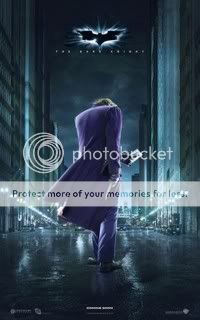 The Dark Knight, starring Christian Bale, Michael Caine, Aaron Eckhart, Maggie Gyllenhaal, Morgan Freeman, and the late Heath Ledger, was the top grossing movie of 2008. Taking place in the city of
The movie opens with the Joker (Ledger) and his crew of thugs robbing a bank – the bank account belonging to another gang. The Joker uses this as leverage to gain the gang’s assistance in killing Batman (Bale). Harvey Dent (Eckhart), the city’s new “ray of hope,” offers to help Batman in protecting the city, even giving himself up as Batman, to keep him on the street. In turn, Dent is taken into custody. When being transported to Central, the Joker took an 18-Wheeler and ensues in a high-speed chase. Batman, of course, comes to the rescue, saving Dent and clearing his name of “Batman.” The Joker is apprehended by Officer Gordon. However, Dent is taken, along with Rachel Dawes, by the Joker’s thugs to separate buildings, both filled with oil drums. And then, a new enemy for Batman is born out of revenge and hate.
Hans Zimmer and James Newton Howard composed the background music to The Dark Knight. Fitting the title, all of the songs are very dark, and very suitable for the scenes they are played in. For example, in the beginning, the music is slightly anxious, which fits because the Joker’s minions are anticipating the robbery, are anticipated who they shoot, and who, if anyone, would shoot them. When Batman appears, the music is dark, fitting the way he’s always out at night, protecting the city of
The acting in The Dark Knight is done exceptionally well, even going so far as one of the actors, Heath Ledger, dying from getting so into character. Christian Bale does an excellent job as well, portraying Batman’s dark demeanor in his expressions and voice. Ledger seemed to have the hardest part, having to play a depressed psychopath, or Batman’s other half; the half you never see. The Joker’s character was so depressing, Ledger ended up overdosing on anti-depressants in the middle of 2008.
When I first saw the film, I was appalled at how well it was done. All of the acting, the music, even the length, I thought was perfect. I laughed at some parts, and I felt sad in others. It had me interested the whole time, despite the two and a half hour length. I could look past that, because I knew and felt that it was a great movie. And it was. Deeply entertaining, it strikes you right to the core, if you really get into wondering about how the characters think, how they feel, what made them do this, what made them do that. And since the movie is a thought-provoker, it’s easy to wonder about it. Overall, it’s a good movie, well acted, and easy to love. Easily deserving the billions of dollars it made through DVD/Blu-ray sales and at the box-office.
Tuesday, January 6, 2009
The Pain of Not Knowing
I had fallen to my knees. The pain had sent a terrible shock through my spine all the way down to my toes.
Yeah, I thought, it’s happening again.
I sighed and closed my eyes, my hands planted to the ground, barely holding my upper body steady. I guess you could say I was pretty at peace in soul, but if you had seen me, you wouldn’t have thought it with my body doubled over, hands on the ground and probably sweating. It wouldn’t have been something I would have called peaceful. But I was used to this.
It wasn’t a beating, if that’s what you’re thinking. It’s not some stupid transformation, like turning into a werewolf. Hell, it’s not even a disease that I know of. Honestly, I don’t know what it is. It happens to me every once in a while, and for some reason, it’s always when I’m alone. Never had this “spasm” happened in front of my friends, family, anyone at all. I didn’t know if it was something in my head, or if it was something physically wrong with me.
I had begun to wonder about my sanity. I wanted to believe that I was perfectly sane, that these waves of pain didn’t happen, even though I knew they did.
I’ve done research and I’ve been to a doctor. I’ve told him my symptoms, had X-rays, CAT scans – I’ve had all I can have done, done. The doctor told me I was perfectly normal, that my body wasn’t harmed in anyway, that I was in perfect health.
For a second, I stopped thinking of my malady and breathed, thinking the pains were gone. Only a small spasm rocked my body and made my fingernails dig into the blue earth under me.
Outside, on a trail, I had fallen. There hadn’t been anyone around because this trail was almost always deserted. I don’t even know why I had decided to go on a walk – it was just this random “want” to do it. I laughed and yet another small, but sharp, pain cut across me, almost suffocating me. Maybe that was my problem; wanting to go where no one was.
I smiled at that thought. (No pain this time.) I had always been a recluse, but when I had turned eighteen, my mother forced me to leave her house, telling me to “never come back.” I never did. She was too evil-spirited for me, this being the reason for my wanting to be left alone. The woman scared me, more than you can even imagine. I still see my sister on holidays, but that’s about it.
Perhaps this problem of mine was due to the fact of my finally coming out of my shell and going to people – friends – for comfort. It could be that my body was so sick of being kept in the darkness that every time I went out alone it would react negatively to the lack of people. It seemed silly, even to me, but I could believe anything.
I slowly picked myself up, one leg at a time. I pushed with my hands (on my knees) and rose to my feet, triumphant yet again. I coughed, and put my sleeve over my mouth out of habit. When I drew it away, it had flecks of scarlet on it.
I shrugged. This had happened before, too. I looked up the trail and knew that it was only a few yards back to my house. There, I would have my dog for company. Or at least my body counted him as company.
Staggering back to the house, a thought occurred to me; I knew one day that this strange sickness would have me and no one, not even me, would really know its reason for attacking me.
When I opened the door to the house, I walked inside, and fell onto the couch without closing the door. My dog, Seraph, ran into the living room where I was and jumped up onto the couch beside me and started to lick my arm. She wasn’t a big dog, only a small gray schnauzer, so she didn’t weigh enough to hurt me.
“Hey girl, you doing okay?” I mumbled to the dog. She looked at me with bright eyes and yelped a “hello” to me. My body felt weak as I got up to shut the door. I didn’t want to spasm again. Seraph had followed me to the door like the obedient dog she was.
“It happened again, Seraph. I want to know what is plaguing my body. Can you tell me, girl? Can you?” I bent down on my knees and got to her level, roughly a foot and a half off of the ground. She looked at me with those sparkly brown eyes, but she didn’t have an answer for me, though she did look sorry that she couldn’t help.
“It’s alright, girl. We’ll find a cure for it one day.” I patted her head and walked up to my bedroom to undress and go to sleep. Seraph ran up the stairs past me and jumped up onto the bed, waiting for sleepy-time.
When I woke up the next morning, I remembered that I had a lunch date with my friend Carmella. I looked at the clock and saw that it was almost eleven-thirty.
“Shit,” I whispered to myself as I jumped out of bed to get cleaned up. I ran into the bathroom to brush my teeth, but stopped when I noticed that Seraph was gone.
“Seraph?” I called. She was always there for me in the morning, no matter how late I slept. She never left the bedroom without me.
I walked down the stairs, not bothering to brush my teeth and only in my underwear, calling her name, but there was no answering bark.
Seraph was gone. And I had no idea where she had went.
Tears bloomed in the corners of my eyes and fell like cherry blossoms in the wind. Even if I had human friends, Seraph was my only real friend. And she was the protection from the sickness while I was at home.
But now I was home alone.
Yeah, I thought, it’s happening again.
I sighed and closed my eyes, my hands planted to the ground, barely holding my upper body steady. I guess you could say I was pretty at peace in soul, but if you had seen me, you wouldn’t have thought it with my body doubled over, hands on the ground and probably sweating. It wouldn’t have been something I would have called peaceful. But I was used to this.
It wasn’t a beating, if that’s what you’re thinking. It’s not some stupid transformation, like turning into a werewolf. Hell, it’s not even a disease that I know of. Honestly, I don’t know what it is. It happens to me every once in a while, and for some reason, it’s always when I’m alone. Never had this “spasm” happened in front of my friends, family, anyone at all. I didn’t know if it was something in my head, or if it was something physically wrong with me.
I had begun to wonder about my sanity. I wanted to believe that I was perfectly sane, that these waves of pain didn’t happen, even though I knew they did.
I’ve done research and I’ve been to a doctor. I’ve told him my symptoms, had X-rays, CAT scans – I’ve had all I can have done, done. The doctor told me I was perfectly normal, that my body wasn’t harmed in anyway, that I was in perfect health.
For a second, I stopped thinking of my malady and breathed, thinking the pains were gone. Only a small spasm rocked my body and made my fingernails dig into the blue earth under me.
Outside, on a trail, I had fallen. There hadn’t been anyone around because this trail was almost always deserted. I don’t even know why I had decided to go on a walk – it was just this random “want” to do it. I laughed and yet another small, but sharp, pain cut across me, almost suffocating me. Maybe that was my problem; wanting to go where no one was.
I smiled at that thought. (No pain this time.) I had always been a recluse, but when I had turned eighteen, my mother forced me to leave her house, telling me to “never come back.” I never did. She was too evil-spirited for me, this being the reason for my wanting to be left alone. The woman scared me, more than you can even imagine. I still see my sister on holidays, but that’s about it.
Perhaps this problem of mine was due to the fact of my finally coming out of my shell and going to people – friends – for comfort. It could be that my body was so sick of being kept in the darkness that every time I went out alone it would react negatively to the lack of people. It seemed silly, even to me, but I could believe anything.
I slowly picked myself up, one leg at a time. I pushed with my hands (on my knees) and rose to my feet, triumphant yet again. I coughed, and put my sleeve over my mouth out of habit. When I drew it away, it had flecks of scarlet on it.
I shrugged. This had happened before, too. I looked up the trail and knew that it was only a few yards back to my house. There, I would have my dog for company. Or at least my body counted him as company.
Staggering back to the house, a thought occurred to me; I knew one day that this strange sickness would have me and no one, not even me, would really know its reason for attacking me.
When I opened the door to the house, I walked inside, and fell onto the couch without closing the door. My dog, Seraph, ran into the living room where I was and jumped up onto the couch beside me and started to lick my arm. She wasn’t a big dog, only a small gray schnauzer, so she didn’t weigh enough to hurt me.
“Hey girl, you doing okay?” I mumbled to the dog. She looked at me with bright eyes and yelped a “hello” to me. My body felt weak as I got up to shut the door. I didn’t want to spasm again. Seraph had followed me to the door like the obedient dog she was.
“It happened again, Seraph. I want to know what is plaguing my body. Can you tell me, girl? Can you?” I bent down on my knees and got to her level, roughly a foot and a half off of the ground. She looked at me with those sparkly brown eyes, but she didn’t have an answer for me, though she did look sorry that she couldn’t help.
“It’s alright, girl. We’ll find a cure for it one day.” I patted her head and walked up to my bedroom to undress and go to sleep. Seraph ran up the stairs past me and jumped up onto the bed, waiting for sleepy-time.
When I woke up the next morning, I remembered that I had a lunch date with my friend Carmella. I looked at the clock and saw that it was almost eleven-thirty.
“Shit,” I whispered to myself as I jumped out of bed to get cleaned up. I ran into the bathroom to brush my teeth, but stopped when I noticed that Seraph was gone.
“Seraph?” I called. She was always there for me in the morning, no matter how late I slept. She never left the bedroom without me.
I walked down the stairs, not bothering to brush my teeth and only in my underwear, calling her name, but there was no answering bark.
Seraph was gone. And I had no idea where she had went.
Tears bloomed in the corners of my eyes and fell like cherry blossoms in the wind. Even if I had human friends, Seraph was my only real friend. And she was the protection from the sickness while I was at home.
But now I was home alone.
Saturday, November 15, 2008
Hellish Paths
I’m at the end of the path. All that’s left is a fork. A stupid fork. I’m left with a path to the right, and a path to the left.
The right side whispers to me thoughts of happiness, forgiveness. The left is full of shadows, fire… like Hell.
It’s my choice.
Come to our side, for the sun is shining brightly with us. Choose the path to the left and sure oblivion awaits you. The right path seems more illuminated.
Don’t listen to the fools! They tempt you, they lie! says the left side.
Who’s to know who is lying here. The left side is beckoning to me, the right still uttering beauties unknown to man.
The demons! They tell you we lie! How can you believe them? Look at that; all the fire; all the destruction! Your own eyes tell you which path is safer. I look: small angels have appeared at the center of the right path. The cherubs stare at me, no longer pleading; they’re demanding.
Do you honestly believe that their side is the best? Haven’t you ever heard of ‘don’t judge a book by it’s cover?’ All of this is an illusion! The best side is clearly here! Small thunder clouds appear to my left.
Choose! Your destiny -- the rest of your life -- is in your hands. The angels disappear, leaving only the two paths in my sight.
We’re begging you. Come to the left side and you shall live in a beautiful land. Don’t judge by appearances! Both of the voices have faded away now, and the thunder clouds are gone.
I’m still unsure as to what to do…The right side is promising, but like the left side said, looks can be deceiving. I grab my head. It’s so frustrating.
My decision could be a haven or oblivion.
Each is deceitful.
The right side whispers to me thoughts of happiness, forgiveness. The left is full of shadows, fire… like Hell.
It’s my choice.
Come to our side, for the sun is shining brightly with us. Choose the path to the left and sure oblivion awaits you. The right path seems more illuminated.
Don’t listen to the fools! They tempt you, they lie! says the left side.
Who’s to know who is lying here. The left side is beckoning to me, the right still uttering beauties unknown to man.
The demons! They tell you we lie! How can you believe them? Look at that; all the fire; all the destruction! Your own eyes tell you which path is safer. I look: small angels have appeared at the center of the right path. The cherubs stare at me, no longer pleading; they’re demanding.
Do you honestly believe that their side is the best? Haven’t you ever heard of ‘don’t judge a book by it’s cover?’ All of this is an illusion! The best side is clearly here! Small thunder clouds appear to my left.
Choose! Your destiny -- the rest of your life -- is in your hands. The angels disappear, leaving only the two paths in my sight.
We’re begging you. Come to the left side and you shall live in a beautiful land. Don’t judge by appearances! Both of the voices have faded away now, and the thunder clouds are gone.
I’m still unsure as to what to do…The right side is promising, but like the left side said, looks can be deceiving. I grab my head. It’s so frustrating.
My decision could be a haven or oblivion.
Each is deceitful.
Subscribe to:
Comments (Atom)